Lambeth Street Closure & Skip Licence Rules Explained
Planning a move, clearing out a property, or arranging building waste in Lambeth can get complicated fast. One minute you are sorting boxes; the next you are trying to work out whether the road needs closing, whether a skip can sit outside the property, and who is actually supposed to apply for the permit. That is exactly why Lambeth Street Closure & Skip Licence Rules Explained matters. It is not just admin. It affects timing, access, safety, neighbour relations, and often the whole flow of a project.
If you have ever tried to get a van in and out of a narrow London street at 8am on a weekday, you will know the feeling. Space disappears, traffic builds, and everyone gets a bit twitchy. This guide breaks the topic down in plain English so you can understand how street closures, skip licences, and local compliance tend to work in practice, what usually causes delays, and how to avoid expensive mistakes.
Where useful, we will also point out how removal planning, packing, and vehicle choice can help. For some jobs, a smaller vehicle like a man and van setup is easier to organise than a large lorry. For bigger moves, a properly planned moving truck or even removal truck hire may make more sense. Truth be told, the best option is the one that fits the street, not just the job sheet.
Table of Contents
- Why Lambeth Street Closure & Skip Licence Rules Explained Matters
- How Lambeth Street Closure & Skip Licence Rules Explained Works
- Key Benefits and Practical Advantages
- Who This Is For and When It Makes Sense
- Step-by-Step Guidance
- Expert Tips for Better Results
- Common Mistakes to Avoid
- Tools, Resources and Recommendations
- Law, Compliance, Standards, or Best Practice
- Options, Methods, or Comparison Table
- Case Study or Real-World Example
- Practical Checklist
- Conclusion
- Frequently Asked Questions
Why Lambeth Street Closure & Skip Licence Rules Explained Matters
Street closures and skip licences sound like back-office details, but they can make or break a project in Lambeth. If you are moving house, refurbishing, or clearing a large amount of waste, access is everything. A missed permit can lead to a skip being refused, a van being moved on, or the wrong vehicle turning up at the wrong time. And once the day starts slipping, the stress tends to snowball. Fast.
In Lambeth, as in much of inner London, roads are busy, parking is tight, and many streets have restrictions that are easy to overlook until the last minute. A skip on the carriageway usually needs permission, and a temporary road closure, suspension, or traffic management arrangement may be required for larger works, difficult access, or safe loading. If you get the logistics wrong, the actual move or clearance often becomes the easy part of a much harder day.
There is also a neighbour impact. Noise, obstruction, delivery timing, and blocked access can all create complaints. That can matter whether you are a homeowner, landlord, business owner, or contractor. Nobody wants to be the person who has a builder parked halfway across the road with a kettle boiling on the pavement while everyone else waits. A bit dramatic? Maybe. But these situations do happen.
The point is simple: understanding the rules early helps you plan better, avoid delays, and keep everyone safer. It also helps you choose the right service, whether that is a small-load clearance, home moves, house removalists, or a commercial relocation with heavier access demands.
Expert summary: If your project affects the public highway in Lambeth, treat the permit question as part of the job plan, not an afterthought. The earlier you check access, the easier everything else becomes.
How Lambeth Street Closure & Skip Licence Rules Explained Works
Let us separate the two ideas, because people mix them up all the time.
Skip licence
A skip licence is the permission needed to place a skip on public land, usually the road or pavement. If the skip sits entirely on private land, such as a driveway or secured forecourt, a licence may not be required. But once the skip touches the public highway, permission is normally part of the picture. The licence helps the council manage safety, access, traffic flow, and responsibility for the container.
In practical terms, the skip owner or waste contractor usually handles the licence application, but the customer should always confirm this in advance. You do not want to assume it is sorted when it is not. That one small assumption can cause a whole day's mess.
Street closure
A street closure is different. It means access to part or all of a road is temporarily restricted for an activity that needs extra control, such as a large delivery, building work, crane lift, or a move that cannot be done safely with normal traffic passing through. Sometimes the arrangement is full closure; sometimes it is a lane closure, parking suspension, or controlled access plan. The exact approach depends on the street layout, the scale of the work, and local requirements.
For many removals and clearances, a formal street closure is not needed. But a permit, suspension, or managed loading bay may still be necessary. That is why you should never assume "it is just a van" means no planning. A small vehicle can still cause trouble if the road is narrow or heavily parked.
What councils usually care about
- Keeping pedestrians and drivers safe
- Maintaining access for emergency services
- Preventing obstruction to residents and businesses
- Reducing damage to the road surface or kerb
- Ensuring waste containers and vehicles are properly controlled
These are normal public-safety concerns. They may sound obvious, but they shape how permits are assessed and what restrictions are attached. If a street is already tight, permit conditions can be stricter than people expect.
For example, if you are planning a clearance alongside a broader relocation project, combining the logistics can make sense. A team handling commercial moves or office relocation services will usually think differently about parking, time slots, and access than someone booking a simple pickup. Different job, different pressure.
Key Benefits and Practical Advantages
Getting the permit side right does more than keep you compliant. It makes the whole project smoother. That is the part people tend to underestimate.
- Less risk of delays: The right permissions reduce the chance that a vehicle, skip, or crew has to stop and reschedule.
- Better access planning: You can schedule loading, unloading, and waste removal around realistic street conditions.
- Improved safety: A controlled setup lowers the chance of blocked sightlines, trip hazards, and hurried manoeuvres.
- Cleaner communication: Neighbours, tenants, and staff know what is happening and when.
- Lower chance of surprise costs: Last-minute changes can be expensive. Planning early usually keeps the budget calmer.
There is also a quieter benefit: peace of mind. When the permit issue is handled, you stop second-guessing the day. That matters more than people think. No one wants to wake up at 6:30am wondering whether the skip lorry is allowed to stop where it is supposed to stop.
If you are coordinating a move and a clearance at the same time, a service like packing and unpacking services can help reduce the number of loose items left floating around at the last minute. Fewer last-minute items usually means fewer headaches on the street.
Who This Is For and When It Makes Sense
This topic is relevant to a lot more people than you might expect. It is not just for builders or waste contractors.
- Homeowners moving house: Especially if parking is tight or the property fronts directly onto the road.
- Landlords and letting agents: End-of-tenancy clearances can generate bulky waste fast.
- Businesses relocating: Office moves often need timed access and temporary loading arrangements.
- Trades and contractors: Refits, repairs, and refurbishments frequently need skip placement or loading control.
- Event organisers or site managers: Any temporary works on a public road need extra caution.
It makes sense to think about permits when the job involves any of the following:
- A skip or vehicle may need to sit on a public road
- The street is narrow or has limited passing space
- Loading will take longer than a simple drop-and-go
- There are parking restrictions, bus routes, or school times to consider
- The job might affect neighbours or access to nearby properties
Sometimes the right answer is not a formal street closure at all. Sometimes it is just choosing a smaller, more flexible setup, like a man with van arrangement for a tighter residential street. That can be the difference between an easy morning and a very awkward one.
Step-by-Step Guidance
If you are trying to plan this properly, a simple step-by-step process keeps things sane.
1. Check the street and the access first
Start with the physical reality of the road. Can a skip be placed safely? Can a vehicle stop without blocking traffic? Is there room for loading, turning, or manoeuvring? Walk it if you can. A quick visit at the actual time of day the job will happen can reveal more than a dozen photos. Morning and evening traffic can feel like two different streets.
2. Decide what kind of activity you actually need
Is this a skip placement, a furniture pickup, a full move, or a combined clearance and move-out? The answer shapes the permit requirements. A bulky goods pickup may only need short stopping time, while a full property clearance may require a much tighter plan.
3. Confirm whether the skip or vehicle will be on public land
This is the key question. If it is on the road, expect permit considerations. If it is entirely on private property, the situation may be simpler, though access and safety still matter. Do not guess. Guessing is how people end up making two trips instead of one.
4. Build in permit lead time
Do not leave the application until the day before, especially if the schedule is fixed. Local rules and processing times can vary, and any extra information request can slow things down. Plan earlier than you think you need to. That advice saves a lot of grief, honestly.
5. Match the vehicle to the street
For a compact street, a smaller vehicle may be the smarter choice. For larger domestic or business jobs, a full moving truck may still be suitable if the access is workable. The vehicle should fit the road, the parking conditions, and the loading time available.
6. Protect the schedule
Build a little slack into the day. If the permit starts at 8am, do not plan a hard handover at 8:05. Roads are unpredictable, neighbours are unpredictable, and sometimes the lift is just slow. Small buffers make a big difference.
7. Keep neighbours and occupiers informed
Even a short notice leaflet or direct message can prevent friction. If people know when a skip is arriving or when a vehicle will block part of the road, they are much less likely to panic when they see cones and hi-vis jackets outside the window.
Expert Tips for Better Results
Here are the practical habits that tend to make the biggest difference.
- Book the access plan before the service plan: First work out where the vehicle or skip can go, then confirm the mover or waste provider.
- Keep the item count honest: Underestimating volume is a classic mistake. It leads to overfilling, extra trips, or a larger vehicle than the street can handle.
- Use the quietest time window available: School runs, bin days, and commuter peaks can all complicate things.
- Take photos before the job starts: This helps confirm whether the loading area is clear, and it can prevent disputes later. Useful, boring, important.
- Ask who is responsible for the permit: Never assume. Clarify whether the contractor, skip supplier, or customer is sorting it.
- Plan for bulky items separately: Sofas, wardrobes, and white goods often need extra handling time, especially on stairs or narrow landings.
One small practical truth: the tidier the property, the easier the street logistics. A clearer hallway and fewer last-minute loose items make the handover smoother. That is why some customers pair access planning with furniture pick up or a pre-move clearance.
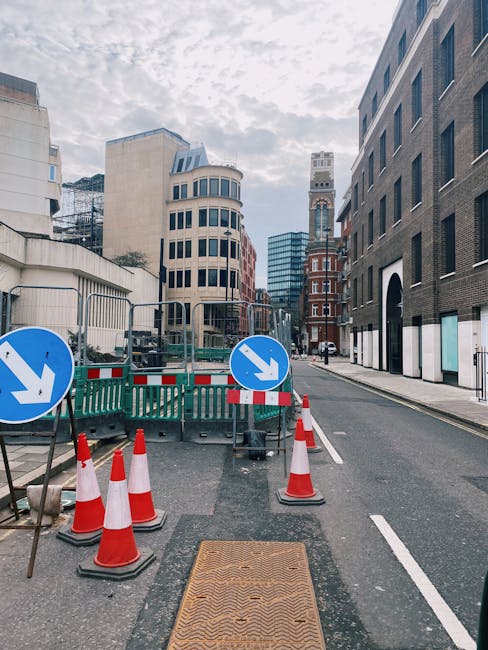
And yes, the cone in the road may look a bit dramatic. But if it keeps everyone calm and safe, it has earned its keep.
Common Mistakes to Avoid
Most problems come from a small handful of avoidable errors.
- Assuming a permit is not needed: A road-facing skip or blocked loading space often triggers permission requirements.
- Leaving it until the last minute: This is the easiest way to lose flexibility and end up paying for rushed changes.
- Choosing the wrong vehicle size: Too big and you may not fit; too small and you may need extra runs.
- Ignoring local parking patterns: A road can look fine at 11am and impossible at 3pm.
- Not telling nearby residents or building management: Surprise closures lead to complaints, even when the work is legitimate.
- Forgetting waste or access responsibilities: Somebody needs to be clear on who manages the skip, the traffic controls, and the site safety.
A lot of these issues sound obvious after the fact. That is the annoying part. The trick is catching them before the job starts. A five-minute check can save an afternoon of apologising.
Tools, Resources and Recommendations
You do not need a complicated toolkit, just a sensible one.
- Street photos: Capture both sides of the road, kerbs, and any dropped kerbs or loading bays.
- Property measurements: Door widths, stair turns, and driveway length all matter more than people expect.
- Item inventory: Note large furniture, waste volume, and anything fragile or awkward.
- Schedule notes: Record likely arrival, loading, and collection times, plus any building access windows.
- Contact list: Keep the key number for the person managing the move, clearance, or building access.
For service planning, it also helps to review the kind of move you are doing. A domestic move may be best handled through home moves, while larger family jobs may need house removalists with better load planning. Business users will often want something more structured, and that is where commercial moves and office-focused support become useful.
If you are still unsure which route fits, browsing the company background on about us can help you understand the service style, while contact us is the sensible next step for a specific access question. Sometimes the fastest answer is simply asking the right person directly. Simple, but effective.
Law, Compliance, Standards, or Best Practice
Because this topic touches public highways, safety, and waste placement, you should treat it as a compliance-sensitive job. Exact rules can vary by location, street type, and the nature of the work. In practice, the safest approach is to assume that anything affecting a public road needs checking before booking.
Best practice usually includes:
- Confirming whether the skip or vehicle will sit on private or public land
- Checking whether the street requires a closure, suspension, or controlled loading arrangement
- Using only properly authorised waste services and vehicles
- Making sure the site remains safe for pedestrians and road users
- Keeping clear records of who agreed to what and when
For removals and transport, it also makes sense to use vehicles that are appropriate for the route and load. If a road is awkward, a smaller or more flexible setup may be better than forcing a large truck into a bad fit. That is where services such as man and van or removal truck hire can be practical alternatives, depending on the job size.
Best practice is not about doing the most formal thing possible. It is about doing the right thing for the street, the schedule, and the people affected.
Options, Methods, or Comparison Table
Here is a simple comparison to help you decide what type of setup usually suits a Lambeth job. It is not a rulebook, just a practical guide.
| Option | Best for | Access impact | Typical risk | When it feels right |
|---|---|---|---|---|
| Skip on private land | Homes with a driveway or forecourt | Low | Space constraints on property | When the skip can be kept fully off the road |
| Skip on public road | Properties without off-street space | Medium to high | Permit and obstruction issues | When road placement is unavoidable and approved |
| Man and van | Smaller moves or light clearances | Low to medium | Parking and short loading windows | When you need flexibility on tight streets |
| Moving truck | Larger household or business moves | Medium | Height, width, and parking fit | When volume is too much for a smaller vehicle |
| Street closure or traffic management | Complex works, awkward access, or safety-critical operations | High | Delays if not planned early | When the work genuinely needs controlled access |
For most people, the choice comes down to one thing: how much of the public road you need to use. If the answer is "quite a lot," then earlier planning becomes non-negotiable. If the answer is "hardly any," a smaller vehicle and a tighter time slot may do the job just fine.
Case Study or Real-World Example
Imagine a family in a Lambeth side street preparing to move out of a two-bedroom flat. The street is narrow, parking is limited, and there is no private driveway. They also need to clear a few bulky items from the basement, including an old sofa, a mattress, and two wardrobes that are heavier than they look. There is a school nearby, so mornings are hectic. By 8:30am the road already feels busier than it should.
At first, they think a standard van will be enough. Then they look at the volume of items and realise it is getting tight. They also notice that a skip would have to sit on the road, which means permission and timing need to be checked carefully. Instead of forcing the problem, they choose a smaller moving setup, split the load into two runs, and arrange the bulky waste separately. That lets them keep the road access manageable and avoid a last-minute scramble.
The result is not glamorous. No one is cheering. But the move happens on time, neighbours stay reasonably happy, and there is no awkward conversation about an unapproved obstruction outside the front door. That, in real life, is a win.
In situations like this, a practical service plan matters more than a perfect one. The aim is not to impress the street. The aim is to get the job done safely and without drama. Small detail, big difference.
Practical Checklist
Use this before you book or confirm anything:
- Have you checked whether the skip or vehicle will be on public or private land?
- Do you know if a street closure, suspension, or loading restriction applies?
- Have you confirmed who is responsible for any permit or licence?
- Is the vehicle size realistic for the street and the amount to move?
- Have you allowed time for loading, traffic, and access delays?
- Have you informed neighbours, building management, or occupants where needed?
- Have you listed bulky or awkward items separately?
- Do you have a backup plan if the road is busier than expected?
- Are you clear on collection timing for the skip or vehicle?
- Have you kept contact details handy for the service provider?
If you can tick most of those off, you are in a much better place than the average last-minute mover. Not perfect. Just properly prepared. And that usually counts more.
Get a free quote today and see how much you can save.
Conclusion
Lambeth street closures and skip licence rules are really about one thing: keeping the job workable in a busy London environment. Once you understand whether the work affects the public highway, the rest of the plan becomes much easier to shape. You can choose the right vehicle, allow the right amount of time, and avoid the sort of problems that turn a simple move into a long, noisy morning.
If you are planning a clearance, move, or access-sensitive job, take a calm approach and check the logistics early. That one habit saves time, money, and stress. It also makes the whole experience feel a lot less chaotic, which, let's face it, is exactly what most of us want.
And if the road looks awkward at first glance, do not panic. Most jobs can be handled with the right planning. A little patience goes a long way, especially on a busy Lambeth street at the wrong time of day.
Frequently Asked Questions
Do I need a skip licence in Lambeth if the skip is on the road?
In many cases, yes. If a skip is placed on the public highway, a licence or permit is typically required. If it stays fully on private land, the situation is often simpler. Always confirm before booking.
What is the difference between a street closure and a skip licence?
A skip licence is usually about permission to place a skip on public land. A street closure is broader and affects road access for traffic, pedestrians, or work activity. They solve different problems.
Who normally applies for the permit?
It is often the skip provider, contractor, or service company, but not always. You should check who is responsible so nothing gets missed. That tiny detail can save a lot of hassle.
Can I place a skip outside my house without permission?
If the skip is on the road or pavement, permission is usually needed. If it sits entirely on your property, you may not need a licence. The exact position matters more than people expect.
How early should I arrange a street closure or skip licence?
As early as possible. Lead times can vary, and last-minute requests are riskier. If the job has a fixed date, do not leave this until the final week.
Do I always need a full road closure for a house move?
No. Most moves do not need a full closure. Often, a careful loading plan, timed access, or a smaller vehicle is enough. A full closure is usually reserved for more complex or higher-risk situations.
What happens if the skip or van blocks the road without approval?
You may face complaints, delays, or enforcement action depending on the circumstances. At best, the job gets interrupted. At worst, you have to move everything and start again.
Is a man and van better than a moving truck for tight Lambeth streets?
Sometimes, yes. A smaller vehicle can be easier to fit, park, and load on narrow streets. For larger loads, though, a bigger vehicle may still be the right call if access allows.
Can I combine a move with furniture or bulky waste pickup?
Yes, and in some cases that is the smartest approach. Combining the jobs can reduce repeat visits and make permit planning simpler, provided the access and volume are realistic.
What should I check before booking a clearance or move?
Check the road access, parking restrictions, item volume, permit responsibility, timing, and vehicle size. If any of those are unclear, ask before confirming. It is much easier to adjust early than on the day.
Do businesses in Lambeth need to think differently about these rules?
Often, yes. Business premises may have different access windows, more foot traffic, and tighter operational timing. Commercial jobs also tend to involve more moving parts, so planning matters even more.
Where can I find more help with move planning?
If you are still shaping the job, looking at office relocation services, packing and unpacking services, or the wider service information on the website can help you choose the right approach for your street and schedule.